How Creative Strategists At Agencies Create Briefs
This guide shows you how to treat briefs like a real product: one per brand per week, same structure every time, with brand context, ad inspiration, clear specs, and AI generated storyboards all in one place. It is a practical workflow for turning scattered ideas into work creators can actually shoot.
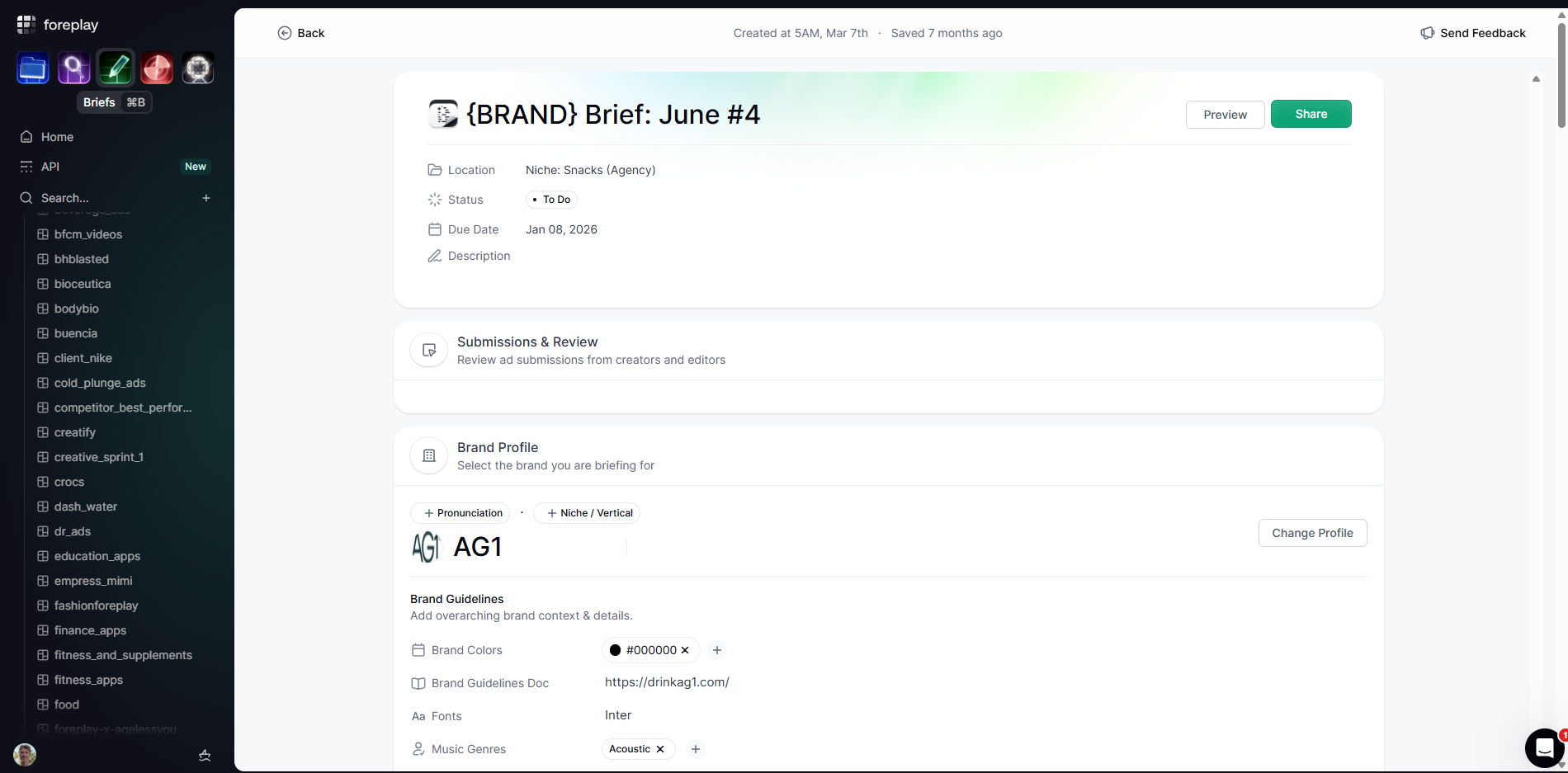

If you work in creative strategy at an agency, your Facebook ad ideas don't matter if they never turn into work that ships.
Clients aren't buying your Zoom call brainstorm chats. They buy the brief, the finished ad, and the results.
It's a lot, and that expectation demands that you're not just creative, but you're organized.
You probably have a system that's working for you. That's great. This is mine. It's how we brief and launch ads for Foreplay, at Foreplay.
This is the way I see it.
If a strategy is the plan, a map from where the brand is now, to where you want it to go.
Then as a strategist you need to detail exactly how your moving from step 1 to step 2, and ultimately to the desired outcome.
I used to help small ecommerce agencies become less small, build briefs for their marketing, train up their teams, and help close high value sales calls. Nothing glamerous.
Can you guess what the common thread between most agencies is? They're messy, and it's kind of cool.
You see incredible creative work coming out of the most silly, disorganized teams. Rag tag groups of every high school cliche, the jock, the nerd, the hot girl and the girls that are a little too into Harry Potter, but not a big fan of the author.
The challenge? It's super unreliable.
Sometimes lightning strikes, sometimes you're losing clients because Jessica is missing meetings while she's out getting matcha latte.
Random Google Docs, screenshots in Slack, decks nobody reads.
The creative might be good, sometimes. But the delivery feels messy, because it is.
Most creative people aren't that organized, and that's okay.
Here's how I use Foreplay AI Briefs to move faster with our creators and designers here at Foreplay.
One brief per brand, every week
Ecommerce brands ship product on a schedule.
You should ship strategy on a schedule, too.
At Foreplay, I block an hour every week to brief our marketing creators and our designers.
Then throughout the week, if inspiration strikes, I'll add more.
Rule of thumb: one clear brief per brand per week.
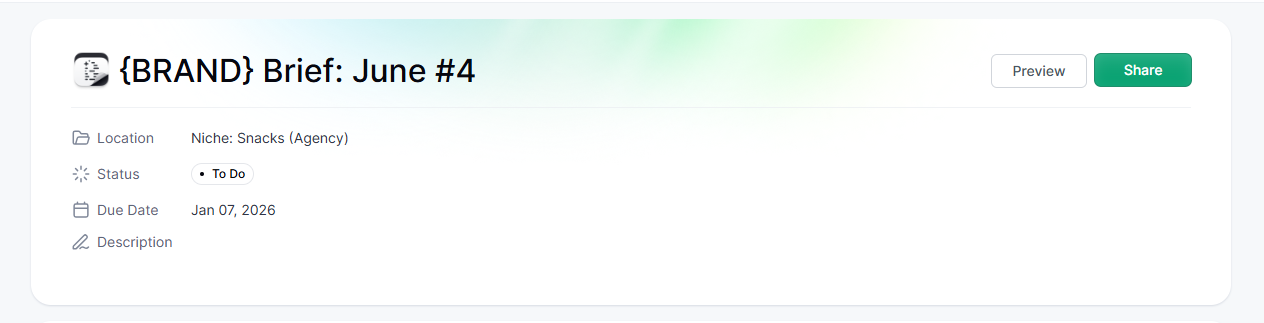
Inside Foreplay, open Briefs and keep the naming simple:
- Add the brand name
- Mark that it is a brief
- Add the month and number
For example:
- “The Ridge– June Brief 1”
- “True Classic – June Brief 2”
(Both these teams use Foreplay, pretty cool right?)
When your client or creative open your briefs, they see a beautiful interactive set of clear instructions.
They know exactly where you're going, they're confident because they're used to Google Doc briefs and you just presented the best brief they've ever seen, and your creators, graphic designers and video editors know exactly what to do.
Get brand identity right, and never think about it again.
The first step in every brief?
Set up the Brand profile. This is where you make sure that the brand identity and it's constraints are respected and brand stakeholders are kept happy.
The best part? You only have to do this once. So if you've ever felt like you keep having to reminding your marketing team which colors and fonts to use, this is for you.
Set it once, and forget it. Every brief you make moving forward will keep your creators on brand, and save you a few headaches.
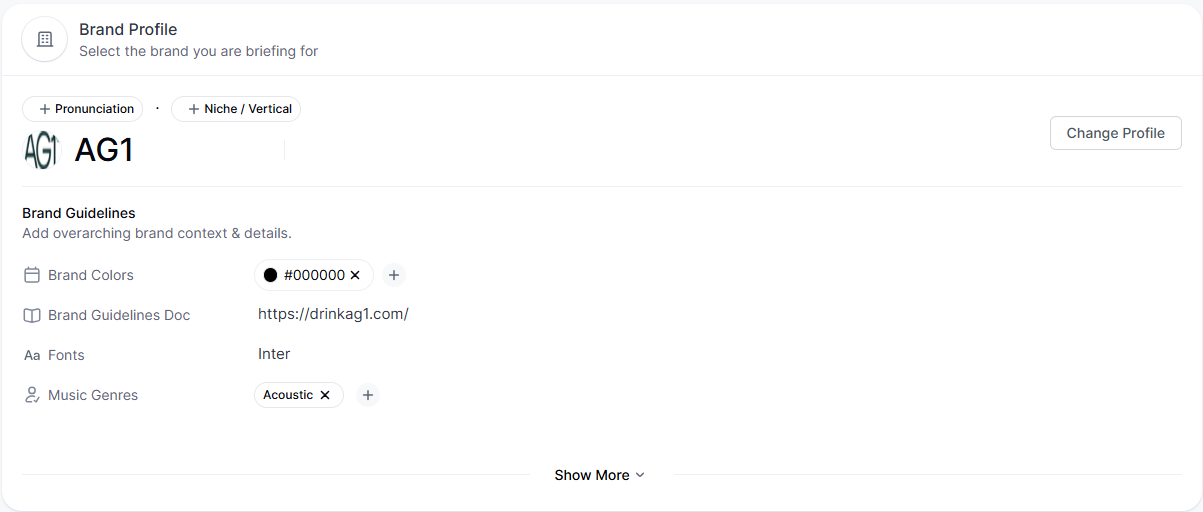
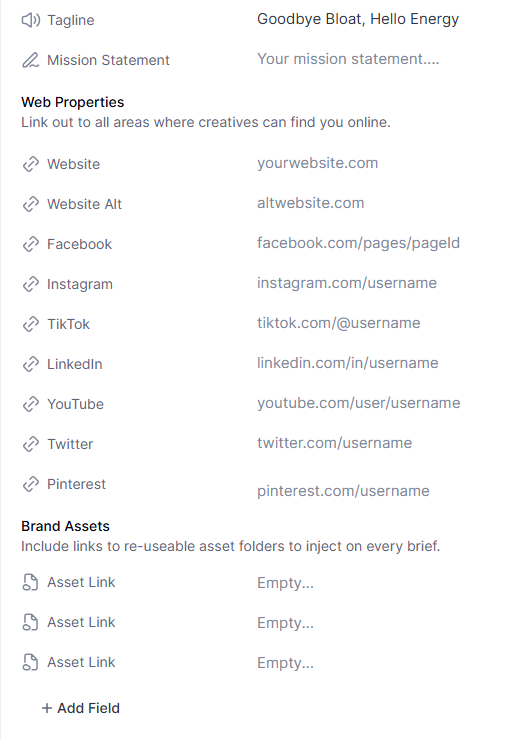
Here are the modular Brand Guidlines details you can add:
- Brand name and niche
- Colors and fonts
- Brand guidelines
- Voice and personality
- Music styles
- Links to asset folders and current ads
- Taglines and mission statements
- Links to existing creatives
- Links to brand asset folders in Drive or Dropbox
You only do this once. Then every brief carries the same foundation.
Creators always know how the brand talks and where to find assets. You're not rewriting “calm, confident, not shouty” every week.
You can even add links to websites and social profiles, so they can do their own research.
Brief using real ads that have proven to work by some of the fast growing brands, less vibes.
If you care about creative, you are already collecting ads:
- From TikTok and Instagram
- From competitors
- From other brands in similar niches
The question is what you do with them?
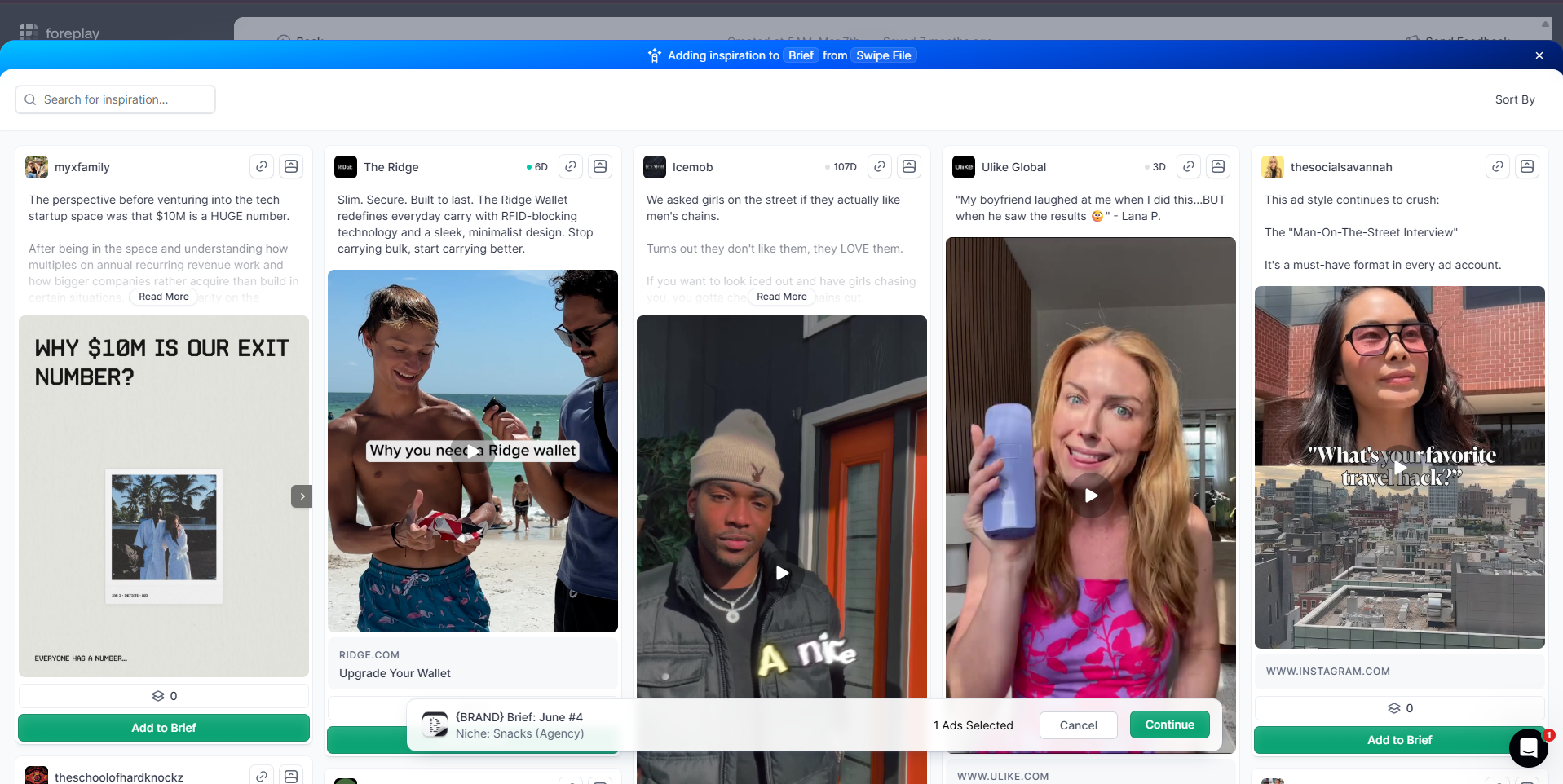
Inside the Inspiration section in Foreplay, you can pull in:
- Facebook, Instagram and TikTok Ads from your Swipe File
- Ads saved with the Chrome extension
- Ads you DM to the Foreplay Instagram account
- Ads that have proven to work for your competitors or the fastest growing brands, that you find in Foreplay Discovery. The world's largest dataset on ads.
My recommendation? Sort ads in discovery by the longest running, and add the status filter to only see ads that are still running.
For any brand, including your competitors, you'll see the ads that have ran the longest, that are still active today.
Unless the marketing team at the fastest growing brands love burning money, this is an incredible signal that these are the ads that are working for them.
The truth is most brands have 1 to 5 ads that are getting more than 90% of their ad spend and driving almost all of their new customer acquisition, their growth.
If you sort by the longest running, and filter for the ads that are still running, you are almost definitely look at those ads.
The last step? Tap Add to Brief and start scripting with AI.
Now when a creator opens the brief, they see the exact ads you want them to study. Not “that UGC video I sent you last week” or a vague “similar to this style”.
Add details, and save hours writing essays.
Most briefs fall apart because they are either one sentence or a five page essay.
Modular Details is the solution. Add what you need to communicate, and nothing else.
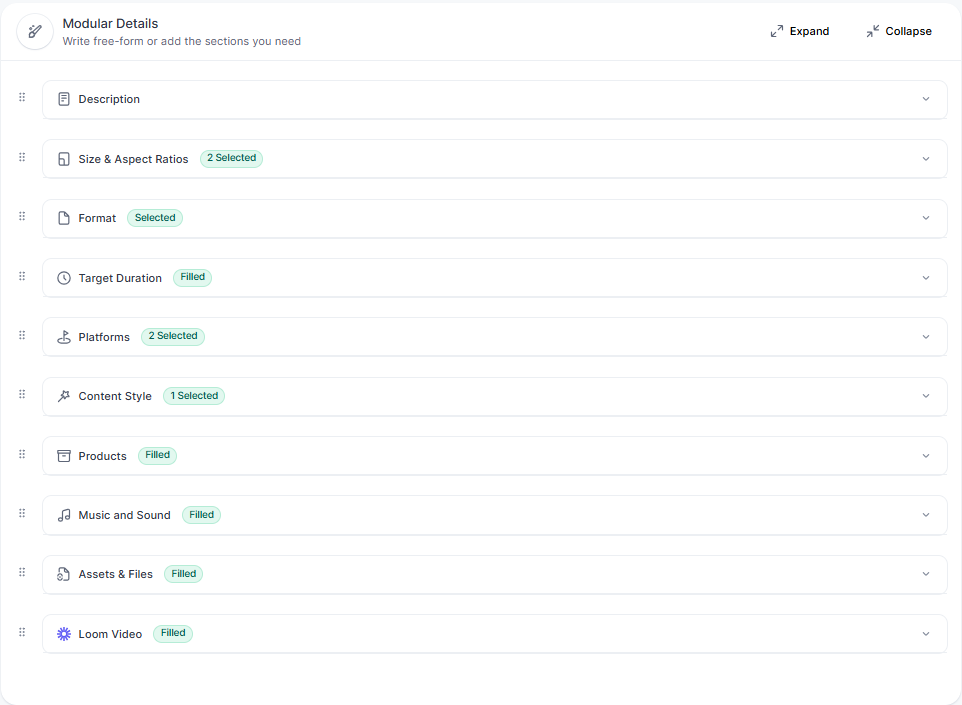
- A short description and context
- Platforms
- Formats and durations
- Aspect ratios
- Content style
- Product or bundle list
- Notes on sound or music
- Extra asset links
The product list is the quiet win.
If you don't say which product this is for, people will guess.
That's how you end up with an incredible video promoting products at the end of their lifecycle.
Copy and paste products, collections or bundles you actually want to sell.
You can also drop in a Loom link. Talk through the idea once. Save yourself a 30 minute call. Plus, every creator can watch it back on their own time.
Your AI digital marketing assistant does the heavy lifting for you
The AI Storyboard Generator is where you employ your own AI digital marketing assistant to do most of the work for you.
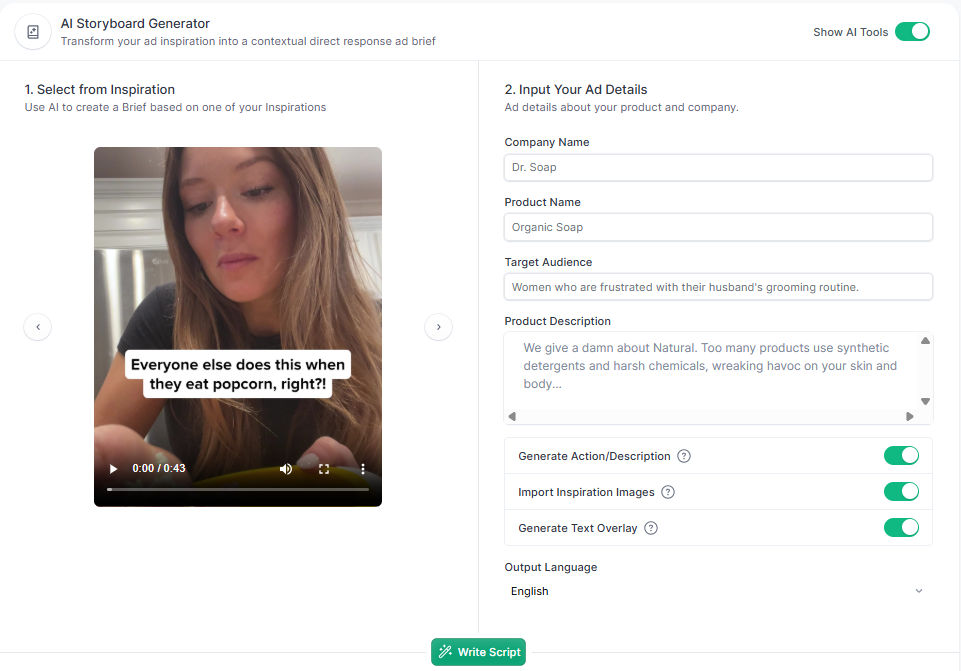
Foreplay takes your inspiration and details and generates:
- A hook
- Script copy
- Scene by scene actions
- Suggested text overlays
- A storyboard using screenshots from your inspiration ads
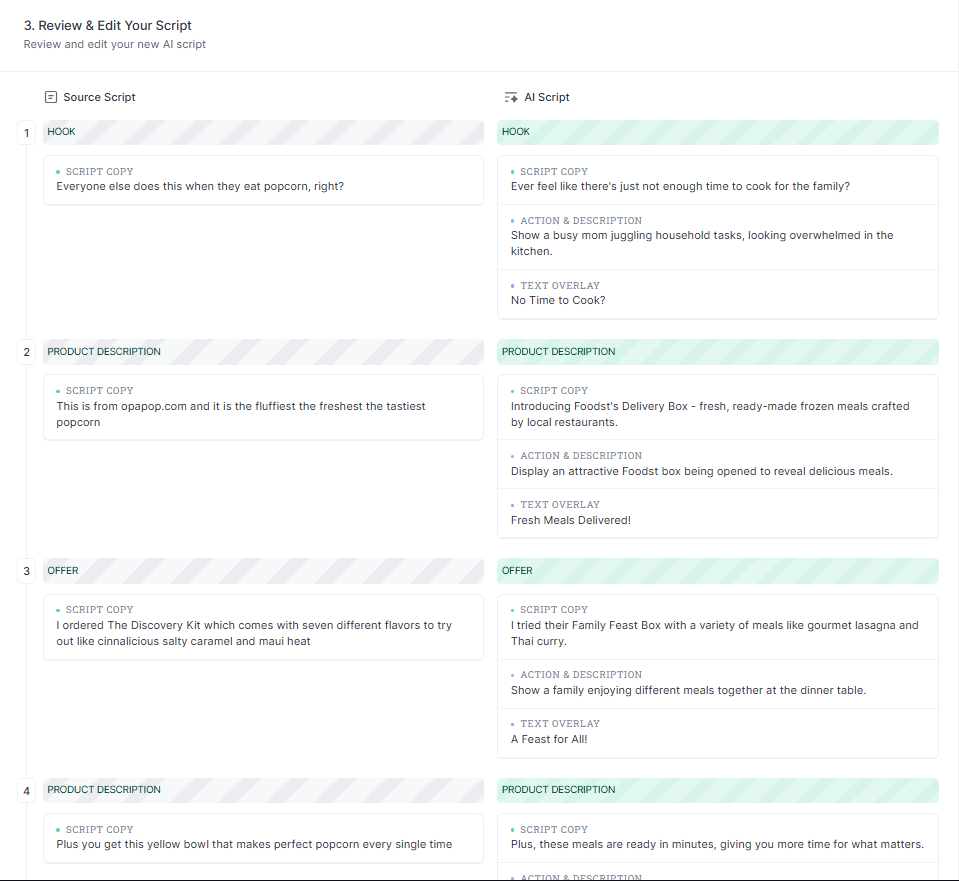
It's not there to replace your judgment. It gets you to an incredible first draft., one you don't have to copy and paste from ChatGPT into Google Docs then download as a PDF to email to a client.
You read it, add your finishing touches and you're done.
This is so faster than writing from scratch.
Transparently, this is how Facebook ad briefs are written in 2026.
You give 10% of direction at the start, AI does 80% of the work, and you give 10% at the end to add your finishing touches.
One Link From Idea To finished file
When the brief is ready, hit Share.
Drop the link into Slack, Asana, ClickUp, Notion, email. Whatever you use.
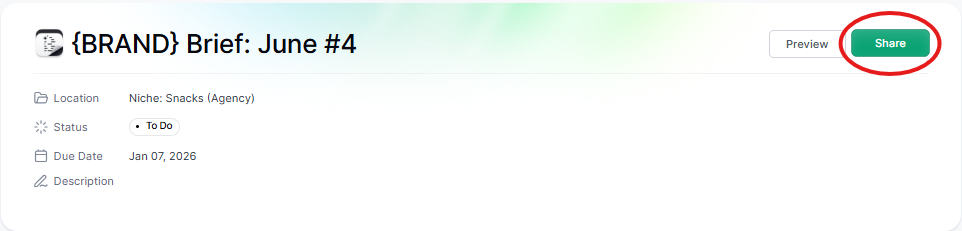
Creators see:
- Brand profile
- Inspiration
- Modular details
- Script and storyboard
When they're finished, they can upload the final files into the same brief.
You are not digging through chats and folders trying to match “final_final_v3.mov” to a concept. Everything lives in one place, from idea to finished asset.
If you work with ecommerce brands, you can't just be the person with good ideas.
You need a simple system that ships clear direction at a steady rhythm, looks beautiful and professional every time, and is easy for creators to act on.
Used properly, Foreplay Briefs gives you exactly what you need.
You stop being the person dropping screenshots in Slack that never become real ads and become the person who sends tight, actionable ad creative briefs that don't just turn into ads, they're built on the largest dataset on ads, so they're likely to be your next best performing ad.
