E35: PostScript is more than a tool with Mike Manheimer
In this episode of the SaaS Operators Podcast, we talk to Mike Manheimer, CMO at Postscript, about what happens when AI, services, and SaaS all converge around a single outcome.
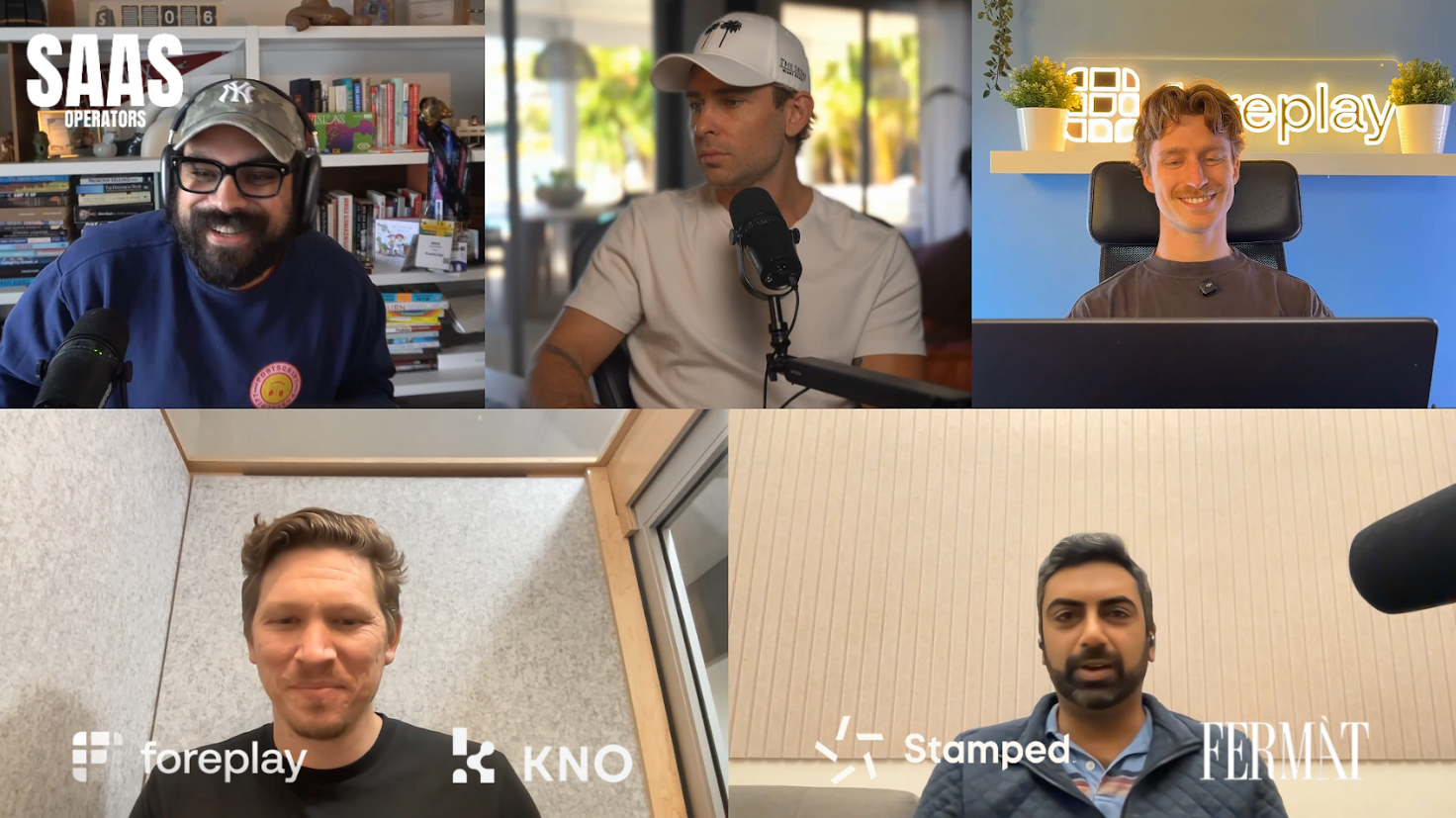

In this episode of the SaaS Operators Podcast we sat down with Mike Manheimer, CMO at Postscript, to talk about a “new” idea that actually isn’t new at all.
Software has always been about outcomes. Not workflows. Not features. Not “we make it easy to do X.” Money in, value out. That is the job.
SaaS Was Never About The Tool
Mike has been in SaaS since 2009, back when everyone was still ripping out on prem. His take is blunt: the good companies were always measured on outcomes, the bad ones just told themselves a story about software.
No buyer wakes up thinking, “today is the day I finally buy some software.”
They wake up thinking:
- I need more revenue
- I need lower cost
- I need my team to move faster
Then they go shopping for tools that get them there.
Take Postscript. Customers do not actually want “an SMS platform.” They want to maximize the return on every dollar they spend sending texts. Lower total cost of ownership. More revenue from the same or smaller SMS budget.
If Postscript ships great tech but the merchant’s SMS dollars do not grow, that customer churns.
It has always worked that way.
And if you have ever worked inside a winning SaaS company, you know it. Renewals do not come from NPS, from pretty dashboards, or from great onboarding. They come from “this thing is making us more money or saving us a lot of time and headcount, and we can feel it.”
Jobs To Be Done Is Still The Entire Game
Underneath all the AI noise and new terminology, the jobs to be done idea still explains most of SaaS.
Customers are “hiring” you to do a specific job:
- Make our SMS program more profitable
- Turn our support into a cost advantage
- Give our sales team more qualified pipeline
- Turn our raw product usage into visibility and decisions
If you understand that job as well as or better than your customer, and you point your whole company at delivering it, you end up with:
- Clear product decisions
- Clean messaging
- Multi year renewals
Whoever gets closest to the customer’s problem wins.
And “closest” does not mean who spends the most time in Gong or who can recite the ICP persona deck. It means: I understand the stakes, the economics, the constraints, and the context deeply enough to act like an extension of the customer’s own brain.
The Expectation Shift: From “Enable Me" to “Do It For Me”
Where things are changing is what “outcome” means in practice.
Jeremiah put words to a shift a lot of operators feel:
- Old world: software enabled you to do the thing
- New world: software is increasingly expected to do the thing for you
That is a big difference.
Historically, you bought a tool and then paired it with.
- A team
- An agency
- Professional services
Together they delivered the outcome.
Rishabh pushed here. He argued that we are moving closer to a world where customers expect the software vendor to own the whole problem. They do not want to orchestrate a tool, an internal team, and an agency. They want to point at the outcome and say “you do this.”
You can see early versions of this in companies like Ramp and Rippling, where “software plus services plus financial rails” blur into one outcome.
Software Plus Services Is Not A Cheat Code, It Is The Job
Postscript is already living this. They have Postscript Plus, a service arm that is basically an SMS agency inside the company. Some customers use it, most do not, but it exists for one reason: some brands will not get the outcome with just the tech and their internal team.
When the sales team sees that, they prescribe Postscript Plus. Not as an upsell gimmick, but as a way to get the customer to the goal they actually care about. This is not new either. Professional services have always been part of software, even in on prem days.
What is changing is the expectation that more and more of the work collapses into the “software vendor” bucket. Whether you call that forward deployed engineers, “done for you,” or agent workflows barely matters. The only real question is what the customer believes your job is:
- Are you providing a tool plus guidance
- Or are you accountable for the entire outcome
If you run a SaaS company, that expectation line is creeping your way.
People vs Software vs Salaries
There is a funny contradiction in the market right now.
On one hand, executives talk about “software eating the world,” AI agents, and fully automated funnels. On the other hand, people still intuitively value people more than software.
- 2 thousand dollars a month for software feels expensive
- 2 thousand dollars a month for a person feels like a bargain
That gap is exactly where software plus services can shine.
If your product can credibly say:
“For less than the cost of a junior marketer, we will own your SMS program end to end and prove that you are making more money per send”
Suddenly the price anchors against salaries, not against other tools. That is where real deal size lives. And it is also where the risk lives, because now you are replacing a person, not just a piece of software.
Why Support Is First and Retention Is Last
Look at where AI is making the fastest inroads: support.
- Support is often outsourced
- The team is out of sight and out of mind
- It runs on scripts and documentation
- Leadership mostly sees it as a cost center
So when an AI vendor shows up and says “cut your support cost by 70 percent,” there is not a lot of internal political resistance. There is no team sitting beside the founder saying “please do not replace us.”
Retention and lifecycle are different.
Owned channels like email and SMS sit much closer to the brand, the founder, and the growth team. Those teams are in the room, they are invested in the creative, and they see that channel as growth, not pure cost.
This is why, today, very few brands are banging down Postscript’s door saying “please take the whole thing and automate it all with AI.” Most push against that.
Not because the outcome is wrong, but because the organizational setup is different.
Business owners absolutely want to scale revenue with fewer people. They want lower communication overhead and cleaner org charts. But the path to that reality runs through a minefield of brand, taste, politics, trust, and fear of loss of control.
The Taste Problem and AI Slop
There is also a real creative problem.
Retention performance today is inflated by how strong the mediums are.
- Meta is so good at distribution that mediocre ads can print
- Email and SMS are so close to the purchase that even default welcome flows make money
You can plug in a template, send messages to people who are already likely to buy, and your dashboard will show hundreds of thousands in attributed revenue.
The bar is low, but the expectations are high.
Brands want:
- Strong performance
- Tight brand alignment
- Very low “AI slop”
That last one is real. Mike said he expected brands to tolerate something like “80 percent AI, 20 percent human polish.” What he is seeing instead is closer to “99 percent right or we are not using it.”
You can show them a text that will almost certainly outperform their current copy. If it feels off brand, they will not ship it. That is not always rational from a pure revenue standpoint, but it is correct from a brand building standpoint.
And for a lot of founders, taste is the last moat they believe they have. Product features get copied. Pricing gets compressed. Channels saturate. Taste and culture are what feel defensible.
If you are Postscript, you are not just competing with “could we build this in house.” You are competing with the retention director’s belief that their taste is the moat.
Outcomes Plus Taste As The New Lock In
Here is where it gets interesting for SaaS economics.
If you can truly nail:
- The performance side
- The brand side
- The taste side
for a specific customer, you get a new kind of stickiness.
If True Classic believes that Postscript has effectively trained “the best possible True Classic SMS operator” inside the product, churn becomes very unlikely. Not because of contract friction or technical switching costs, but because your system embodies their unique taste and economics.
In a way, that gets you closer to the stickiness of the old on prem world, where switching was physically painful. Only now the lock in is not hardware, it is the fit between:
- That brand
- That customer base
- That data
- That creative system
That is an opportunity and a responsibility for anyone building SaaS today.
Brand, Culture, and AI As Supply Side
There is a bigger cultural layer here too.
You can think of culture as “demand,” a reflection of what people are asking for. In software, that might look like users saying:
- Know everything about me
- Make the best recommendation
- Take the best action on my behalf
But culture is also supply side. It is created by brands, big and small, who decide to put a specific vision into the world.
- Nike did not follow demand, it defined a view of what sport and identity could be
- Apple did not run surveys and then decide to “think different”
- Weird niche brands like Teenage Engineering pursue their own taste and let demand catch up
If you lean too hard on AI to tell you what to say, how to design, and which creative to ship, you risk defaulting to the average. That is fine if you are happy to live at the status quo. It is fatal if your ambition is to define a category or a culture.
Most of us are not going to build the next Nike. That is reality. But everyone still chooses some level of taste to stand for. And that does not come from a language model.
Where Does This Leave SaaS Operators
Put all of this together and you get a simple, hard job description for anyone building or running SaaS right now.
Your job is to:
- Understand the outcome your customer actually cares about
Revenue, efficiency, risk, experience. Quantify it. Tie it to their P and L.
- Own more of that outcome over time
Sometimes through software. Sometimes through services. Increasingly through automation. The mix will change, the job will not.
- Stay closer to the customer than anyone else
Not just in research, but in willingness to thread the needle between performance and brand, automation and taste.
- Use AI to expand outcomes, not just cut costs
Cutting headcount is the easy pitch. The more interesting pitch is: we make entirely new plays possible that humans simply cannot run at scale.
- Protect and respect taste
Your customer’s brand is not a rounding error. It is often the moat that justifies their existence. If your automation tramples that, you lose the renewal.
In the long run, I think Zach is right. As more of the execution gets automated, the part that is left for humans is direction and taste. That will be true for brands, and it will be true for SaaS companies that serve them.
The thing that does not change is the scoreboard.
Outcomes in, churn out.
