E45: Swiping Left on Ads Like Tinder with John Gargiulo
In this episode we talked to John Gargiulo, the founder of Airpost. Airpost makes new video ads every week for enterprise advertisers spending $1M or more a month on Facebook ads.
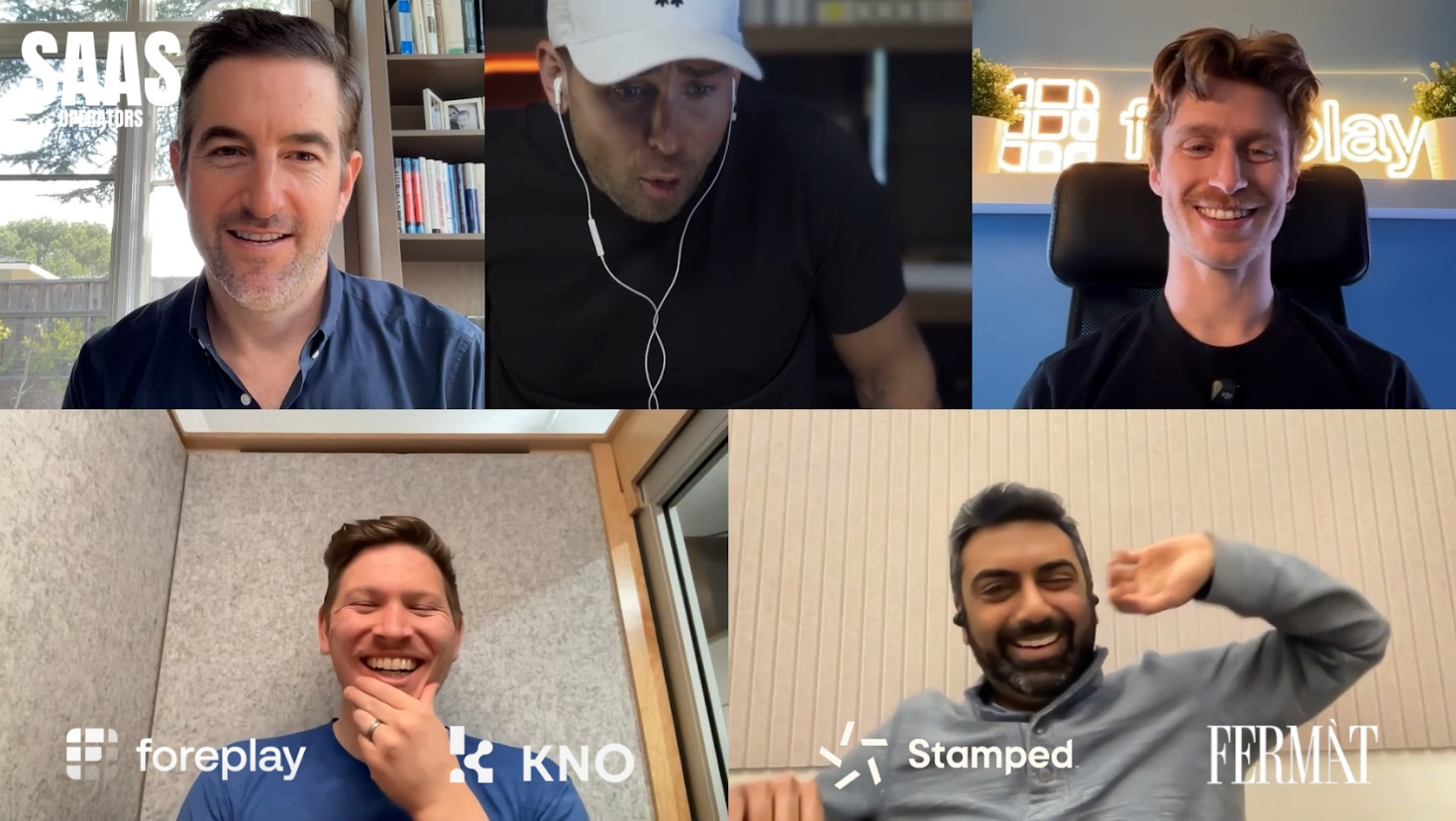

In this episode of the SAAS Operators Podcast, we talked to John Gargiulo, the co-founder and CEO of Airpost.is clients get new ads every week, some of them never open the product, and yet, performance keeps improving.
Airpost arms enterprise advertisers spending $1M+ a month on paid social with new video ads every week. Clients log in, tweak a clip, swap some copy, upload and go. And a lot of them just don't log in at all, they just use Slack.
What is your product actually worth when nobody's looking at the screen? That's the question every SaaS founder should be sitting with right now.
The conversation went everywhere from there. Is AI making your day harder? Is everyone becoming a bottleneck to their own agents? Is per seat pricing running on borrowed time? And what happens when the only job left is taste?
The Exhaustion Nobody Talks About
There's this narrative that AI makes everything easier, and I bought it for a while. Then I actually started using these tools and my day got significantly harder.
Here's what happens. The bullshit work disappears. Inbox scrolling, document reformatting, all the stuff that felt like productivity but was actually a break from thinking. Gone. What you're left with is 100% real decisions, all day, every day. Which sounds great until you realize the bullshit work was load bearing. We were coping with it. Reading documents lawyers sent and calling it a busy afternoon. That was the break and nobody knew it until it got automated away.
Think about it like cooking. You've got six slow cooker stews going at the same time and they all keep getting stuck. You're running around the kitchen, chopping something here, stirring something there, and one just dies and there's onions sitting on the counter. But by the end of day you made eight stews by yourself that would've taken a whole team. You feel like a god and you also need to lay down for 3 hours. That's the trade nobody talks about, and there's no inbox to hide in anymore.
Everyone Is The Bottleneck Now
If you're still the one doing the work, the workflow is wrong. The workflow is agents doing stuff and coming to you when they get stuck, which means everyone is now the bottleneck to their own agents. That's why everything feels so intense and everyone is exhausted at 2pm even though they technically haven't done anything with their hands.
Zach uploaded 3 years of tax credit claims to Cowork and it made Deloitte's previous work look like a 2 year old made it. It took him less than half a day and he saved 65-75 grand. Deloitte was charging 12.5% on a $700k tax credit and a few hours of AI outperformed their consultants. At some point you have to ask what you're paying for.
Hiring has basically stopped for the people on this podcast. Growing companies, and when people leave they're just leaving the seat empty. Amazon, Shopify, Microsoft are all showing the same thing, headcount shrinking while revenue climbs. At some point you have to stop calling that a trend and start asking what it means for you.
Direction Is The Only Job Left
I keep coming back to this 10-80-10 framework. 10% direction, 80% leverage, 10% evaluation. That ratio is looking more like 1-98-1. The human part keeps shrinking in volume while somehow mattering more, which is a weird thing to type but I think it's accurate.
If you've been in ecom you already know what this looks like. Drop shipping. Products became available overseas and a thousand brands showed up selling the exact same stuff. Everyone had a Shopify store and a supplier in Shenzhen and zero idea what to actually sell. Incredible velocity pointed at absolutely nothing.
A design leader at Amazon said taste is the most important thing now. When he uses Claude Code he sets the bar, gives it inputs, the AI executes and he decides what good looks like.
I was screen sharing Foreplay on a customer call and we pressed play on a True Classic ad where the guy is making innuendo jokes while showing off his shirt. The taste makers at this brand loved it so much they forgot we were selling them something. That "yes, that's the energy" moment, I think that becomes the entire job description going forward.
The Orchestra Problem
Everyone has access to the same tools. The sheet music is free, the instruments are everywhere, and you can find really good violin players busking on street corners for $20 a day. The value is putting them together into a symphony and selling tickets, and the person who arranges it, who decides what the audience actually hears, that's the gig.
Airpost is a good example. If all they do is make content, some kid with Claude Code rebuilds them in a year. The moat is everything underneath. The taxonomy that maps what's working against angles, ICPs, creative types, and why it's working. And then making the next round of ads based on that. The system that decides what to make next is what you're paying for.
Some people have gotten so good at production with AI that they're outputting at a ridiculous rate, and a lot of it isn't useful. But if you're batting 300 and the volume is high enough, the math still works. Keep swinging.
The harder question is what happens when a teammate ships 10 things and 3 don't land. Half the team is still measuring productivity by how long someone sat at their desk, and nobody has a playbook for explaining that batting 300 at high volume is the new standard.
Per Seat Pricing Is On Borrowed Time
If every customer eventually demands an MCP, and they will, per seat pricing is dead. One agent does the work of 5 people and nobody's logging in. That's like charging per chair at a restaurant where everyone's ordering delivery.
Some companies are moving toward percent of spend. You do well, we do well, free to try. Others are layering usage based AI features on top of what they already charge. Both of these make way more sense than counting seats when half the seats are occupied by bots that never complain about the UI.
How many SaaS products are you paying for right now that you haven't logged into in seven months? I just checked mine and it's embarrassing. If any of those were usage based I'd be paying $0. Incredible business model honestly, selling software to people who don't use it.
The smart move is patience. Every new customer comes on with the new pricing model. You wake up a year from now and your business looks different. That's how transitions actually work, quietly, and then all at once. You just stop doing the old thing with new people.
The Uncomfortable Part
There's a specific type of person who's going to get squeezed here. White collar worker, 25 -35, technically uncurious. Still has decades of career ahead and enough habits baked in that rewiring how they work feels like learning to write with their other hand. That's the cohort that gets hit the hardest.
Under 25 and you're fine. You learn your job this way from day 1 and this is just how things work. Over 40 and you've probably built enough equity and relationships that you can figure it out. The 25-35 range is the problem. That cohort assumed things would keep working the way they learned them, and they've got decades of career ahead with a skill set that's depreciating faster than their car. At least the car still gets you to work. The skill set might not.
Look at Anthropic's market cap versus headcount. Look at OpenAI's. Then look at literally any traditional company. The ratio tells you everything about how many people the market thinks it takes to create that much value, and it's a small number getting smaller every quarter. Somewhere there's a Fortune 500 HR department with 400 people doing the job that 3 engineers and a Claude subscription handle before lunch.
One of the best things said on the podcast. I'm just the messenger. This is happening whether you like it or not. I'm giving you the opportunity to be in camp 1. You should take it. That's probably the most honest thing you can tell someone right now.
Where This Is Headed
The vision for Airpost is a CMO swiping left and right on ads like Tinder. Eventually the system learns her taste so well she stops swiping. And then companies are running thousands of ads finding niche audiences automatically and nobody's watching any of them.
Five years from now we're all laughing about this conversation the same way people laugh about "should brands be on social media" or "is mobile commerce a real thing." Someone's going to find this episode and put it in a LinkedIn carousel about how obvious it all was.
Build for the 98% that's going to be automated. Build your moat around the 1% that requires a human to look at something and say yes or no.
The taste layer. The direction layer. The thing that decides where the rocket points before you light the fuel.
Everyone has access to the same tools, the same agents, the same velocity. Pick a direction worth pointing at, or someone else's agent will pick one for you.
